CRM vs Marketing Automation (2026)
The real difference, what each tool does, whether you need both, and how they work together to grow revenue.
Get both in one platform →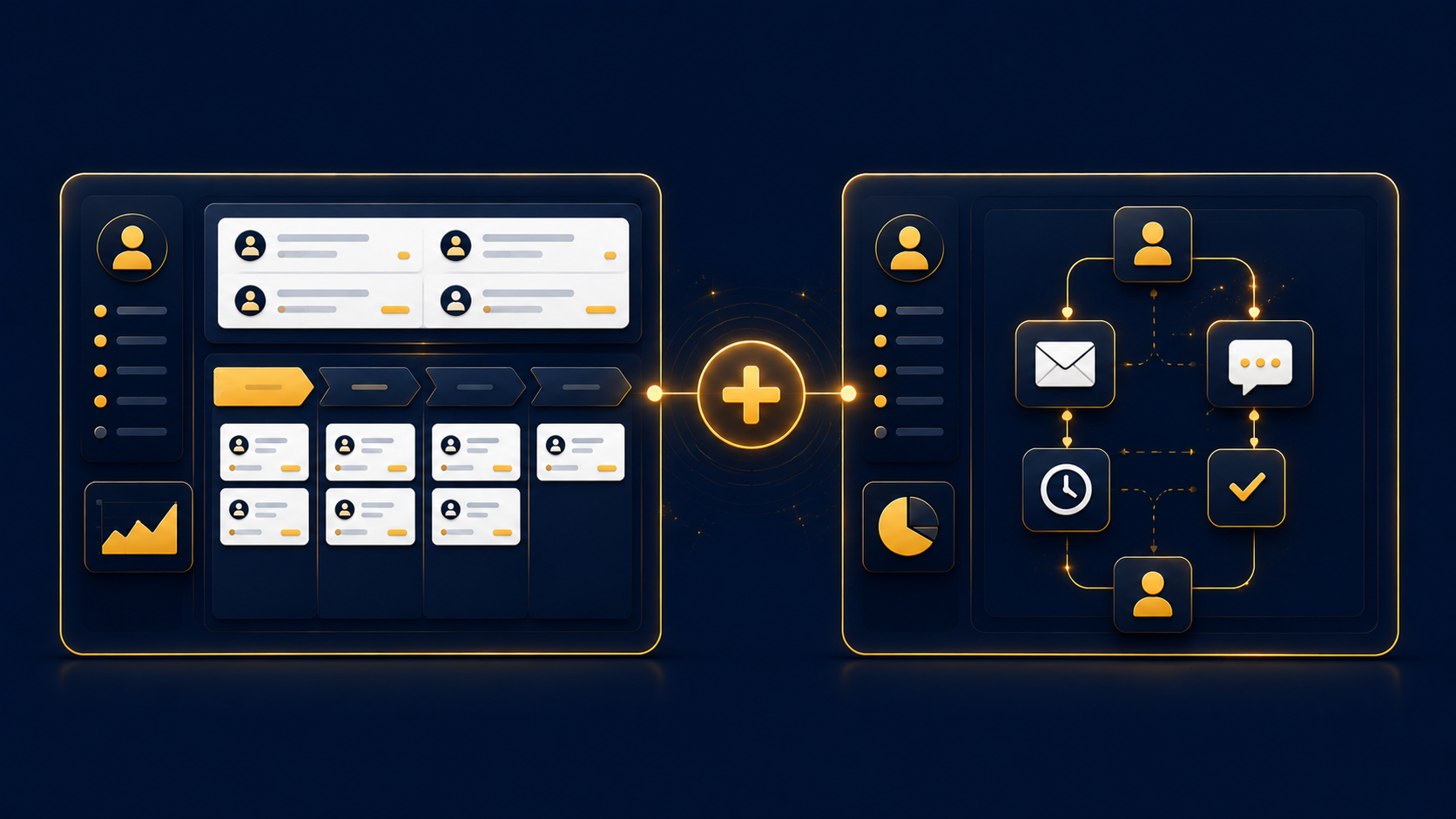
Last updated: June 2026 · Written by the CRMReviews team
CRM and marketing automation get lumped together, but they do different jobs. A CRM manages relationships with people you know; marketing automation generates and nurtures new leads at scale. This guide explains the real difference, whether you need both, and how they work together - plus how 2026's all-in-one platforms blur the line.
Key takeaways
- CRM manages one-to-one relationships and moves deals through the pipeline.
- Marketing automation handles one-to-many campaigns and engages leads at scale.
- They do different jobs with little overlap - to scale, you likely need both.
- The biggest gains come from integrating them into one seamless workflow.
- In 2026, all-in-one platforms put automation inside the CRM, so two separate tools isn't always necessary.
The core difference
A CRM deepens relationships with known contacts - it shows your sales rep every call, email and deal, and helps move opportunities to close. Marketing automation works the other end: it generates and qualifies new leads at scale, moving audiences through a funnel efficiently without worrying about individual relationships yet. One is one-to-one; the other is one-to-many.
Side by side
| CRM | Marketing automation | |
|---|---|---|
| Focus | Relationships & deals | Campaigns & lead generation |
| Scale | One-to-one | One-to-many |
| Used by | Sales | Marketing |
| Manages | Known contacts & pipeline | Leads & audiences |
| Goal | Close and retain | Attract and nurture |
What a CRM does
A CRM is the system of record for your customer relationships: contacts, deal pipeline, activity history and sales reporting. It helps your team manage a growing customer base and never drop a follow-up. See what is a CRM for the detail.
What marketing automation does
Marketing automation fills the pipeline. It captures leads, nurtures them with behaviour-triggered email and SMS, scores them, and hands the ready ones to sales - all automatically and at scale. See what is marketing automation.
Do you need both?
For most growing businesses, yes. The two tools do genuinely different things with only a sliver of overlap - neither can replace the other. Marketing automation keeps a constant flow of new leads coming in; the CRM manages and closes them. Try to run a growing business on just one and you'll feel the gap: either great lead flow with no follow-through, or great follow-through with an empty pipeline.
How they work together
The real value is in integration. When connected, the two create a seamless, continuous workflow - marketing automation generates and warms leads, then hands them to the CRM for a personal close, and the CRM feeds customer data back to refine campaigns. That handoff keeps sales and marketing aligned and stops leads slipping between the cracks. See how the funnel ties it together in our marketing funnel guide.
The all-in-one option
If buying, integrating and paying for two systems sounds like hard work, an all-in-one platform solves it. GoHighLevel combines CRM and marketing automation in one place, so leads flow from capture to nurture to close without any handoff between tools - on one shared database. See our review, the all-in-one CRM guide, or the best all-in-one marketing platform roundup.
How to choose
If you only struggle with one side - say, no follow-up system - start with the tool that fixes it. But if you're scaling, plan for both, and seriously consider an all-in-one platform to avoid integration headaches and double subscriptions. Map your bottleneck first, then decide.
Frequently asked questions
What's the difference between CRM and marketing automation?
A CRM manages one-to-one relationships and deals; marketing automation handles one-to-many campaigns and lead generation at scale. Different jobs, little overlap.
Do I need both a CRM and marketing automation?
To scale, usually yes - marketing automation fills the pipeline with leads, and the CRM manages and closes them. Neither replaces the other.
Can one tool do both?
Increasingly, yes - all-in-one platforms now build automation into the CRM, so a single platform can cover both from one database.
How do CRM and marketing automation work together?
Marketing automation generates and warms leads, then hands them to the CRM for a personal close; the CRM feeds data back to improve campaigns.
Which should I get first?
Start with the tool that fixes your biggest bottleneck - lead flow (automation) or follow-up and closing (CRM) - then add the other, or choose an all-in-one platform.
CRM and marketing automation, together
GoHighLevel combines both in one platform - leads flow from capture to close on a single database, no integration needed. Try it free for 14 days.
Start your free trial →