What Is Marketing Automation? A 2026 Guide
What marketing automation is, how it works, the real benefits with data, and how to get started turning manual marketing into always-on systems.
Try marketing automation free →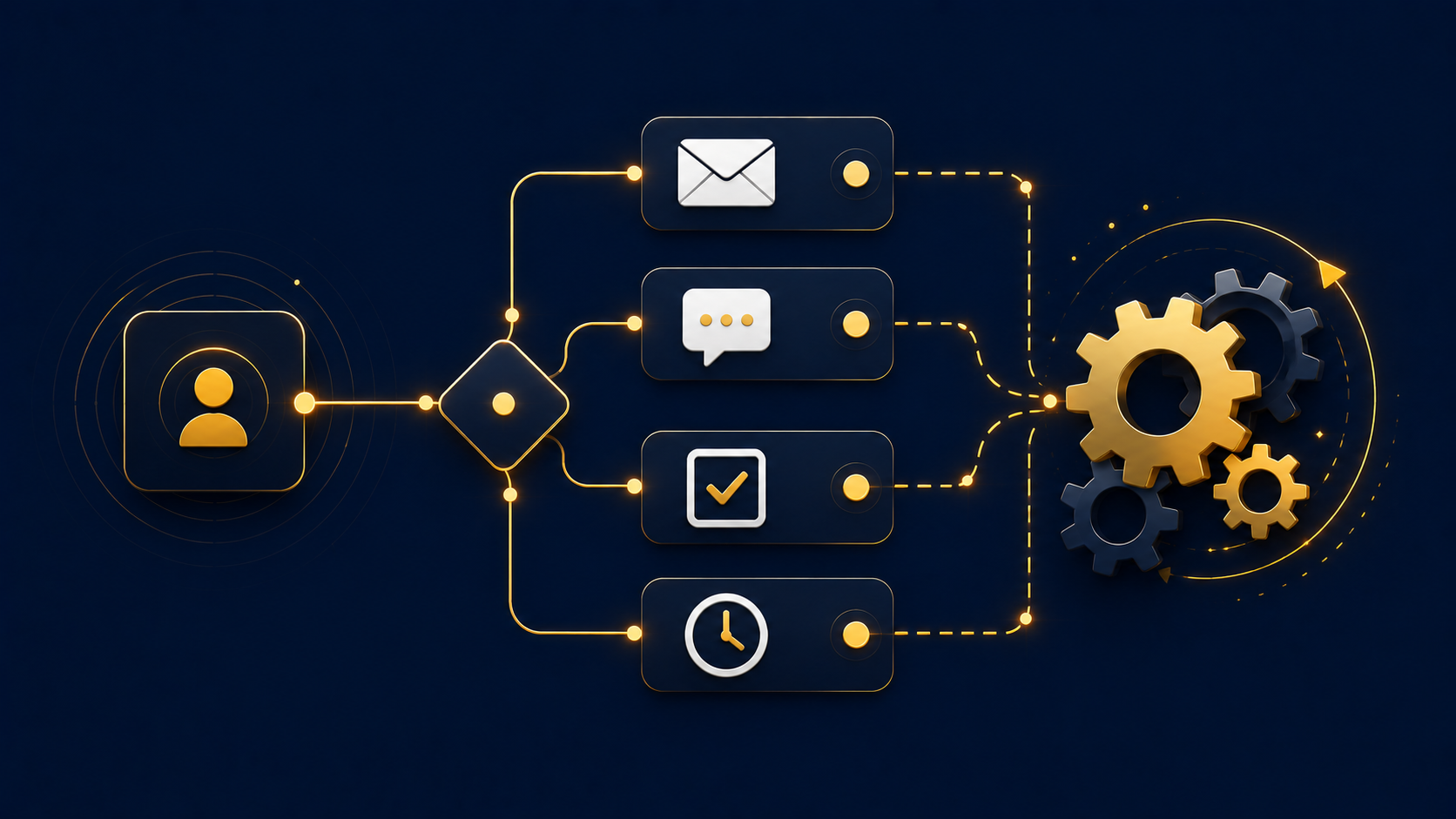
Last updated: June 2026 · Written by the CRMReviews team
Marketing automation is software that runs your marketing for you - sending the right message to the right person at the right moment, automatically. Instead of manually emailing every lead or remembering every follow-up, you set up workflows once and they run on their own. This guide explains what marketing automation is, how it works, the benefits backed by data, and how to start.
Key takeaways
- Marketing automation uses software and rules to run always-on, personalised campaigns across channels.
- It saves marketers 6+ hours a week and returns about $5.44 for every $1 spent.
- Automated lead nurturing can drive a 451% increase in qualified leads.
- It works through triggers and workflows - actions fire automatically based on behaviour.
- In 2026 the shift is from isolated automation to AI-driven, omnichannel orchestration.
What is marketing automation?
Marketing automation is the use of software, workflows, data and AI to run marketing activities automatically across multiple channels - email, SMS, social, push and in-app messages. Rather than managing every interaction by hand, you create automated processes that guide prospects through the buying journey. It combines your customer data with predefined rules to deliver personalised, always-on campaigns.
How marketing automation works
At its core are two ideas: triggers and workflows. A trigger is something a person does - signs up, clicks a link, abandons a cart. A workflow is the sequence that fires in response - send a welcome email, wait two days, send a follow-up, notify sales. Once built, these run automatically for everyone who meets the trigger, so thousands of people get a timely, tailored experience without extra work from you.
The benefits
- Saves time - 74% of marketers say automation eliminates manual work, freeing 6+ hours a week.
- Strong ROI - businesses average about $5.44 back for every $1 spent.
- Personalisation at scale - behavioural data triggers tailored messages to thousands, one-to-one.
- More leads & conversions - adopters saw 80% more leads and 77% higher conversion rates.
- Better retention - timely follow-ups and loyalty journeys lift lifetime value.
Common examples
- Welcome sequences - greet and onboard new subscribers automatically.
- Lead nurturing - educate prospects until they're ready to buy.
- Cart recovery - abandoned-cart messages convert at over 10%.
- Re-engagement - win back inactive contacts.
- Review & referral requests - prompt happy customers at the right moment.
Marketing automation vs CRM
They're closely related and increasingly combined. A CRM stores customer data and manages relationships; marketing automation acts on that data to run campaigns. The best results come when they share one database, so a behaviour logged in the CRM instantly triggers an automated message. That's why all-in-one platforms bundle both.
2026 trends
The big shift is from isolated automations to broader orchestration. AI now analyses customer behaviour in real time to deliver dynamic, tailored messaging across email, social and web automatically, while conversational marketing via chatbots and true omnichannel integration are becoming standard. The direction of travel: workflows that optimise themselves.
How to get started
Start small. Pick one high-value workflow - usually a welcome sequence or lead nurture - map the trigger and steps, and build it in your platform. Measure, refine, then add more. To understand the journey your automation supports, see our marketing funnel guide and what is a lead. An all-in-one platform like GoHighLevel pairs marketing automation with a CRM so everything runs from one database - see our review or the best all-in-one marketing platform guide.
Frequently asked questions
What is marketing automation in simple terms?
Software that runs your marketing automatically - sending the right message to the right person at the right time based on rules and behaviour, across email, SMS and more.
How does marketing automation work?
Through triggers and workflows: a person's action (a trigger) fires a predefined sequence of messages and tasks (a workflow) automatically.
What are the benefits of marketing automation?
Big time savings (6+ hours a week), strong ROI (about $5.44 per $1), personalisation at scale, more leads and conversions, and better retention.
What's the difference between marketing automation and CRM?
A CRM stores customer data and manages relationships; marketing automation acts on that data to run campaigns. They work best sharing one database.
What's a good first automation to set up?
A welcome sequence or a lead-nurture workflow - both are high value and straightforward to build.
Put your marketing on autopilot
GoHighLevel combines marketing automation with a CRM, so behaviour triggers the right message automatically. Try it free for 14 days.
Start your free trial →